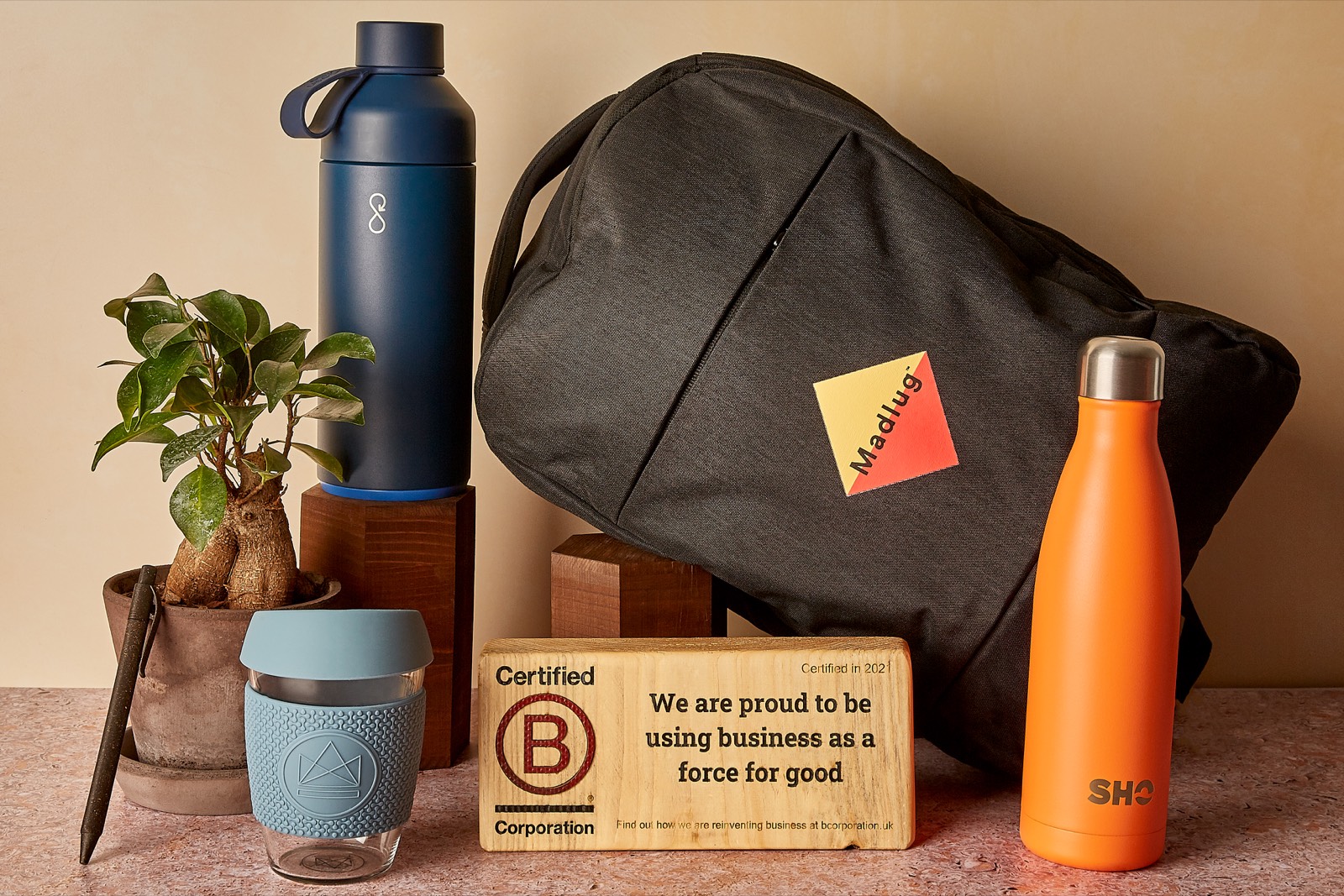

Employee onboarding boxes are one of the few moments where companies can showcase value and tell your employees “hey, we love you” instead of “here’s some socks…”. Most companies use that moment to say “we ordered 500 of these in 2023 and we’re working through them.”
Our handy comprehensive guide covers how to evaluate onboarding box services, what to put in the box, what to budget, how recipient choice works, and how to measure whether any of it did anything. I.E all of the good stuff. It’s written for HR and people teams sending welcome gifts across one office or fifteen.
Just remember – when your team feel respected, they’ll stay (it’s proven).
Key takeaways
- Onboarding boxes shape a new hire’s first impression before their first meeting does.
- Recipient choice cuts waste and lifts satisfaction, because people pick what fits, what they can eat, and where it goes.
- Sourcing from social enterprises turns a welcome gift into fair-wage hours and materials pulled back from landfill.
- Social Supermarket carries 200+ sustainable brands with impact reporting built in for teams reporting against ESG goals.
- Modern gifting platforms remove the address spreadsheet and the approval chain, across every location you hire into.
What is an employee onboarding box?
An employee onboarding box is a curated set of branded merchandise and gifts sent to a new hire in their first days, usually combining daily-use items such as drinkware and notebooks with brand-led items such as apparel and stationery.
The box does more work than its contents suggest. Week one is when a new starter is quietly working out what this company is actually like underneath the careers page. A good box answers that honestly before anyone has to say it out loud.
For remote and distributed hires it carries even more weight, because it might be the only physical thing your company ever puts in their hands.
Why the bulk-buy welcome box is running out of road
Sustainable onboarding boxes matter in 2026 because employees notice when a company’s environmental claims and its merchandise choices disagree with each other.
The merch industry ran for thirty years on one business model: buy in bulk, warehouse it, hope. Hope the sizes are right. Hope you hire the number of people finance forecast. Hope nobody rebrands. When the hope runs out, the excess goes to landfill and takes next year’s budget with it.
That model is losing to a very simple test. A company that talks about environmental responsibility in its recruitment materials and then posts a polyester tote inside a plastic mailer has told the new hire which of those two things is true. New starters are extremely good at spotting this, usually by Wednesday.
Sourcing from social enterprises fixes the arithmetic. Every product carries something past the logo: fair-wage employment for people locked out of the workplace, materials rescued from waste streams, funding for clean water projects. The gift and the mission statement finally agree with each other.
How do you evaluate an onboarding box service?
Evaluate onboarding box services on three things: whether recipients can choose, whether impact is measured in specific numbers, and what the inventory model does when your hiring is lumpy.
Catalogue size and delivery speed are the easy questions. Everyone passes those. These are the ones that separate suppliers.
Can the recipient choose?
Traditional swag programmes ship one identical box to everyone. That means guessing sizes, guessing dietary needs and guessing taste for someone you have met twice on Teams. Recipient choice turns it around: you build a collection inside your budget, send one link, and they pick.
Our team gifting platform works this way. Recipients choose their gift and add their own delivery address, so you are not maintaining a spreadsheet of home addresses for people who have not started yet. Legal will be delighted. So will whoever currently chases postcodes.
Can you get the impact numbers out?
If you report against ESG goals, you need gifting data that survives contact with a board deck. Look for measurement in units, not a green leaf icon next to the word “eco-friendly,” which by now means roughly nothing.
Useful metrics look like hours of fair-wage work funded, kilograms of waste diverted, plastic recovered, meals provided. Numbers you can lift straight into a slide without dressing them up.
What happens when hiring goes quiet, then loud?
Some providers demand minimum order quantities. Some produce on demand. Some hold warehouse stock you draw down. Hiring almost never runs at a steady rate, so if you onboard three people in March and thirty in September, an on-demand model saves you from guessing wrong twice. Predictable high-volume hiring is the one case where holding stock genuinely earns its shelf space.
What should go inside an employee onboarding box?
A good onboarding box balances daily-use items with brand-led ones, and favours a few high-quality products over a pile of cheap promotional ones.
We work with companies like Wagestream to deliver onboarding boxes from our trusted social enterprise food & drink brands like Toast Brewing (making beer from surplus bread) and Divine chocolate (the first farmer owned chocolate brand). These are products that have a lasting impact, well after they’re scoffed round the family dining table.
Drinkware that funds fair wages
Bottles and mugs get used every day, in meetings, at desks, on the walk to the station. Highest mileage item in the box by some distance. We stock 545 sustainable drinkware products, each with impact credentials attached to the maker as well as the material. Shop sustainable branded drinkware.
Stationery made by people getting a first chance
Good notebooks get filled. Promotional pens die on day three, and they die in front of your logo. We also sell notebooks made out of limestone (yes you heard right!). Shop sustainable branded notebooks.
Tech accessories rescued from the waste stream
Laptop sleeves, cable tidies, power banks. Real problems, solved. Made from recycled inner tubes or reclaimed ocean plastic, they start a conversation every time they come out of a bag. Shop sustainable branded tech.
Apparel people wear outside the building
Branded apparel is the highest-risk item in the box. A badly cut t-shirt in a colour nobody chose is a charity shop donation before probation ends. Inclusive sizing plus recipient choice is the difference between a wardrobe staple and a dust cloth. Shop sustainable branded apparel.
The handwritten bit
A welcome card. A line from the manager. A note explaining what the gift funded and who made it. Costs almost nothing and does more emotional work than everything else in the box combined. We can include a handwritten card in all of our onboarding boxes, made from seeded paper so you can plant the note and do a bit of good after reading!
How does recipient choice change the onboarding experience?
Recipient choice increases the likelihood a gift gets used, because the person choosing knows their own size, diet and taste better than a procurement decision made six months earlier.
It also says something. A company that asks “what would you like?” rather than announcing “here is what you get” has told the new hire how it intends to treat them. That lands on day one and it stays landed.
Then the practical wins pile up. No address collection before someone has started. No hoodie in the wrong size. No hamper full of things a coeliac cannot eat, sitting unopened under a desk while everyone politely says nothing.
How do you keep it consistent across every office?
Brand consistency across locations comes from one curated approved range that every team orders from, rather than each office sourcing merchandise locally.
The new starter in Manchester should get the same welcome as the one in London. The one in Munich should not spend a fortnight watching their box sit in customs while their manager sends increasingly apologetic emails.
Two things fix this. First, a centralised approved range, which is what our branded webstores do: teams order inside the guardrails without a single approval email reaching you. Second, a partner who has handled cross-border duties and restrictions often enough to know what clears which border. Food gifts in particular have strong opinions about international travel.
What about the packaging?
Packaging should protect the contents, reflect the brand, and avoid undermining a sustainability message with three layers of plastic.
The box is the first thing they see, before a single item comes out of it. Right-sized, recyclable, no unnecessary plastic. Nothing undoes a sustainable gift faster than the polystyrene it arrived in. At Social Supermarket we’re able to offer branded packaging and inner sleeves from fully recycled materials – whatever your company needs.
How do you measure whether the programme worked?
Measure onboarding box programmes on new hire feedback, impact metrics such as fair-wage hours funded and waste diverted, and the admin time the programme costs to run.
Add one question about the welcome package to your onboarding survey, then read the answers honestly. Track the impact numbers, because they feed ESG reporting and make the spend defensible the moment someone senior asks what the merch budget bought this year. Then count the hours your team loses to chasing addresses and coordinating shipments, and compare that against what a platform does without being asked. If you sign up to our team gifting platform or branded webstores, we’re able to track the impact of each item on your impact dashboard.
What goes wrong most often?
The most common onboarding box mistakes are choosing quantity over quality, ignoring sizing and dietary variation, sending merchandise that contradicts stated company values, and never reviewing the programme after launch.
Ten cheap items make a worse impression than one good one, because ten cheap items is ten separate reminders that somebody did the maths on the wrong axis. Identical apparel guarantees a portion of it is unwanted. Disposable merch from a company with a sustainability page invites the obvious question. And a programme set up in 2023 and never touched since is telling every new hire that this company stopped paying attention three years ago.
How do you get started?
Start by defining objectives and constraints, auditing what your current gifts achieve, evaluating partners against your criteria, then piloting with one cohort before rolling out.
Decide what the box is for first, because employer branding, sustainability credentials and cost efficiency pull in different directions. Then audit what you send now: ask recent hires what they received, what they still use, and what they quietly gave away.
When you evaluate partners, ask for samples and ask how impact is measured. Then pilot with one hiring cohort rather than a full year. Problems found in a pilot cost a fraction of problems found at scale.
Where onboarding gifting goes next
Onboarding gifting is moving toward HRIS integration, product-level impact data, and personalisation that goes further than letting recipients choose.
Platforms will trigger off hire dates and role assignments without anyone raising a ticket. Vague sustainability claims will keep losing ground to numbers attached to individual products. And choice will extend into role-specific and tenure-based gifting, so year one and year five stop looking identical.
The point of all this
An onboarding box is the first physical thing your company puts in someone’s hands. It turns up before the first review, before the first team lunch, before they have worked out who to trust.
Send something made by a social enterprise, packed in materials that will outlast the job, chosen by the person receiving it, and you have said several things at once without writing any of them down.
We build onboarding gifting programmes for HR teams who would rather not spend September in a spreadsheet. Talk to our team and we’ll show you what yours could look like.
FAQs about employee onboarding boxes
When should employee onboarding boxes arrive?
Before or during the first week, ideally on or just ahead of the start date. We coordinate delivery timing across multiple locations, so a Manchester starter and a Munich starter get the same welcome on the same day.
How do recipient-choice platforms handle dietary requirements and allergies?
Recipients select from your curated collection, so they choose around their own requirements without anyone having to ask an awkward question first. Our team gifting platform carries products covering vegan, gluten free, alcohol free and other dietary needs.
Can small companies run onboarding box programmes?
Yes, and they often get the most from it, because each hire is a larger share of the team. We have no minimum order requirement, so you can send one box in March and thirty in September.
What makes a gift genuinely sustainable rather than just eco-branded?
Verifiable practices: recycled or responsibly sourced materials, fair-wage production, transparent supply chains, and outcomes measured in numbers. We vet suppliers against these criteria and report impact across multiple dimensions.
How do you balance brand consistency with letting people choose?
You define the collection, they choose within it. Every option meets your standards on colour, quality and messaging before it reaches a recipient. Our branded webstores are built for exactly this.
What impact metrics should HR teams track for onboarding boxes?
Fair-wage hours funded, waste diverted from landfill, charitable contributions per order, and carbon reduction. Our impact dashboard aggregates these across orders, so the data is ready when ESG reporting comes round rather than being reconstructed at year end.